Abstract
Reliable backup power requires more than converting battery energy into AC electricity. A 500W Pure Sine Wave Inverter With Charger HK500PC combines DC-to-AC conversion with battery charging and automatic transfer functionality, helping users manage power supply across different operating conditions.
When evaluating a compact inverter-charger, system voltage, output waveform, charging current, transfer time and electrical protection are key considerations. Understanding these specifications helps equipment integrators select a configuration that matches their loads and backup power requirements.
Explore This Guide
Choose a section to learn more about inverter-charger operation, specifications and application planning.
1. Why Combine Inversion and Charging?
Many backup power systems need to supply AC electricity from a battery while also keeping that battery charged when utility power is available. Using an inverter and charger in one unit can simplify system integration and reduce the need to install separate conversion components.
During inverter operation, DC energy from a compatible battery is converted into AC power for connected equipment. When an appropriate AC source is available, the charging function can replenish the battery. The built-in automatic transfer switch supports switching between available power sources according to the device's operating design.
- DC-to-AC conversion: Supplies AC output from a compatible DC battery source.
- Battery charging: Charges the battery from an AC input within the specified operating range.
- Automatic transfer: Helps manage the transition between AC input and inverter power.
- Integrated controls: Supports monitoring and system coordination through the listed display and communication functions.
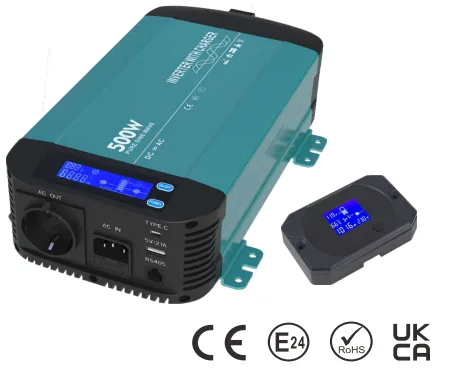
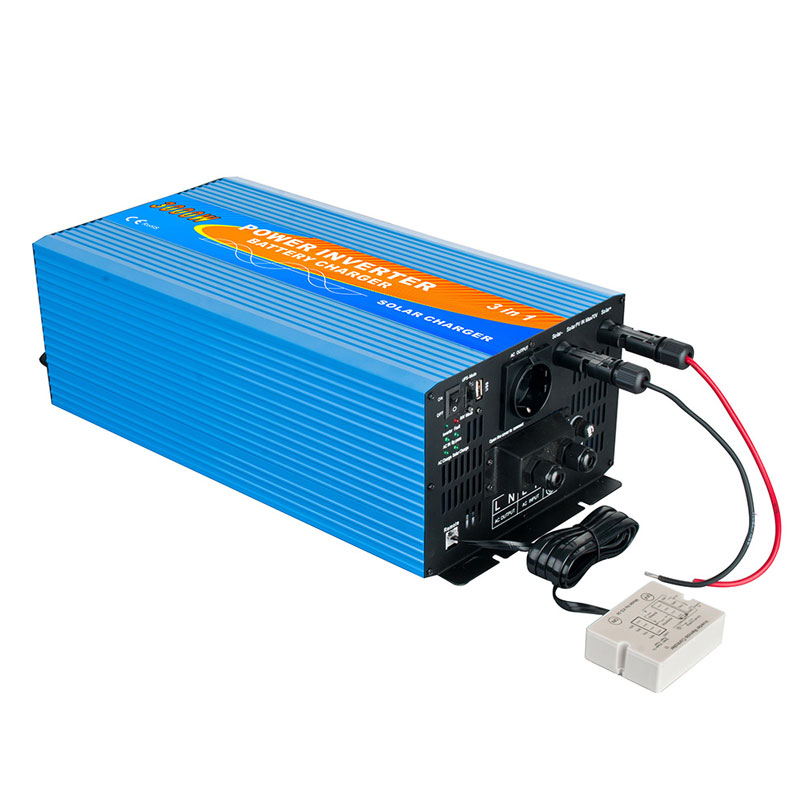
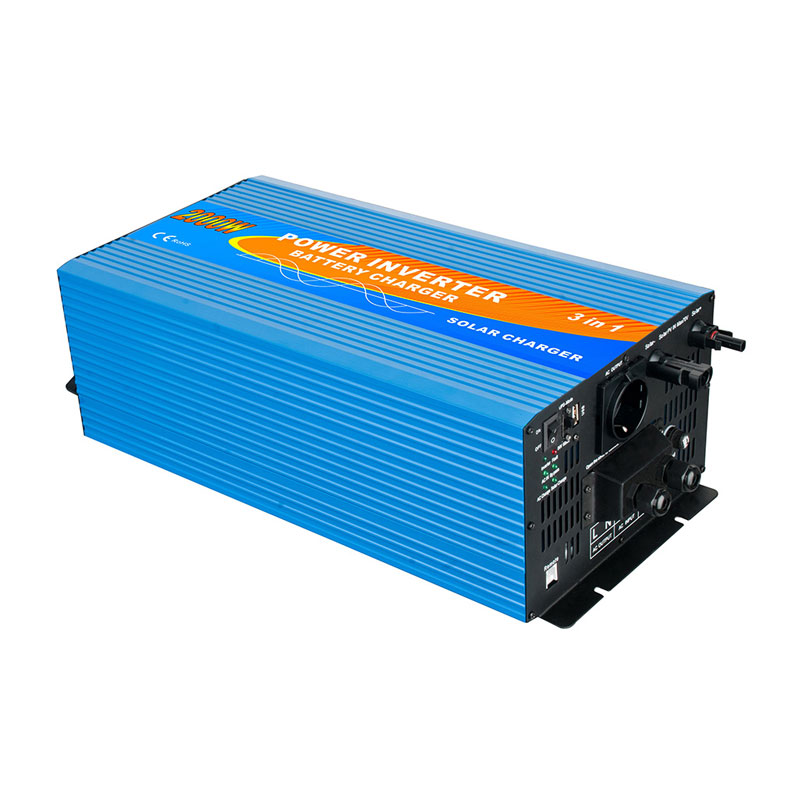
HK500PC inverter-charger product image from the manufacturer's website.
2. Key Product Features
Output quality and protection functions are important when connecting an inverter to electronic equipment. The HK500PC product page lists pure sine wave output with total harmonic distortion below 5%, as well as multiple input and output protection functions.
Features to evaluate
- Pure sine wave output: The specified waveform is designed for AC loads that require a conventional sinusoidal supply. Compatibility should still be confirmed for each device.
- Rated output: The listed continuous output power is 500W, with a stated 1000W surge load for two seconds.
- Charging control: The charger supports a three-stage process covering bulk, absorption and float charging.
- Power-source transfer: The product lists an automatic transfer function with a transfer time below 16 milliseconds.
- Connectivity: USB, Type-C and RS-485 communication are listed; Ethernet is optional.
- Protection functions: Listed protections include input reverse polarity, under-voltage, over-voltage, short circuit, overload and over-temperature shutdown.
3. Technical Specifications
Reviewing the product's technical data helps confirm whether its electrical ratings match the intended installation. The table below summarizes selected specifications published for the HK500PC product family. Confirm the exact model suffix and factory configuration before ordering.
| Specification | Published Information | Selection Consideration |
|---|---|---|
| Continuous output power | 500W ±5% | Check the total continuous load and startup requirements. |
| Surge load | 1000W for 2 seconds | Confirm that equipment startup demand fits within the stated limit. |
| Output waveform | Pure sine wave, THD below 5% | Compare waveform requirements with the connected equipment. |
| DC input configurations | 12V or 24V variants are listed in the product table | Match the unit to the battery bank voltage. |
| Charging current | Maximum 5A or 10A, depending on configuration | Check the battery chemistry, capacity and permitted charge current. |
| Communication | RS-485; Ethernet optional | Confirm interface and monitoring needs for the system. |
| Dimensions and weight | 309 × 182 × 87 mm; 2.6 kg | Allow space for mounting, cable routing and ventilation. |
Input voltage, charging current and AC output options depend on the specific variant. The manufacturer's table also lists different AC input ranges for 110V and 230V systems, so the final configuration should be verified against the intended power supply.
4. Choosing the Right Configuration
Correct sizing starts with the load rather than the inverter's headline wattage alone. Equipment with motors, compressors or other startup-intensive components may briefly demand more power than their normal running consumption.
- Calculate the load: Add the continuous power requirements of devices intended to operate simultaneously.
- Check startup demand: Compare surge requirements and duration with the inverter's published surge rating.
- Match battery voltage: Select a compatible 12V or 24V configuration and use suitable cabling and protective devices.
- Confirm AC compatibility: Verify output voltage, frequency and socket requirements for the destination market.
- Review charging needs: Ensure the charging profile and maximum current suit the battery manufacturer's recommendations.
- Plan installation: Provide adequate ventilation and follow the specified wiring, grounding and clearance requirements.
Important: A 500W rated output does not mean every appliance below 500W is automatically compatible. Startup current, power factor, operating duration and the manufacturer's instructions should all be considered before connecting a load.
5. Application Considerations
An inverter-charger of this power class may be considered for compact backup systems, mobile installations and small off-grid setups, provided the connected loads and battery system fall within its specifications.
- Home backup: Selected low-power electronics, communication equipment and lighting during an interruption.
- Mobile power systems: Compatible electrical loads in vehicles or other mobile installations where the DC source and mounting conditions are suitable.
- Small off-grid systems: Applications where battery-based AC power is needed and the load profile fits the rated capacity.
- Integrated equipment: Systems that benefit from combined inverter, charger and transfer functions in one enclosure.
Actual suitability depends on the required runtime, battery capacity, ambient temperature, ventilation and load characteristics. For medical, safety-critical or other sensitive equipment, verify the required backup architecture and any additional protection or certification requirements before use.
6. Frequently Asked Questions
What does a pure sine wave inverter do?
It converts DC battery power into AC electricity with a sinusoidal output waveform. Whether it is suitable for a particular appliance depends on the appliance's voltage, frequency, power and waveform requirements.
Can the inverter charge a battery while connected to AC power?
The HK500PC product combines inverter and battery-charger functions. Confirm the correct input configuration, battery compatibility and charging settings in the official documentation before installation.
How should I determine whether 500W is enough?
Calculate the simultaneous continuous load and check startup surges. Keep the required load within the unit's rated capacity and follow the manufacturer's guidance for surge operation and environmental derating.
What should be checked before ordering the HK500PC?
Confirm the DC battery voltage, AC input and output voltage, frequency, charging current, communication options, connector requirements and the current product datasheet for the exact configuration.
Does the inverter have built-in protection?
The product page lists input and output protection functions, including under-voltage, over-voltage, reverse polarity, short circuit, overload and over-temperature shutdown. Review the manual for operating thresholds and recovery procedures.
Ningbo Kosun New Energy Co.,Ltd develops inverter and power-conversion products for different energy applications. Confirm the required model configuration, battery compatibility and installation conditions with the technical team before integrating the unit into a power system.